The evolution of urbanism is a journey from building to inhabiting. It is a shift from prioritizing infrastructure for vehicles to designing spaces for human interaction, well-being, and community. This strategic goal of creating a “city for people” is particularly challenging, yet profoundly rewarding, when applied to a historic center, where modern needs must be harmonized with a rich cultural and architectural heritage. A prime example of this philosophy is the recent repaving project in the Plaça Ramón Martí in Vallada, a small town in Valencia, Spain.
This intervention is more than a simple surface upgrade; it is a meticulous act of urban choreography. By strategically altering the public realm, it has not only enhanced the functionality of the space but has also redefined its social purpose, demonstrating how a thoughtful design approach can transform a town’s most valuable assets into vibrant, living spaces for both residents and visitors.
Repaving as a Tool for Transformation
Historically, repaving has been a utilitarian task, focused on durability and vehicle traffic. In the context of a historic center, however, it becomes a powerful tool for urban regeneration. The project in Vallada’s Plaça Ramón Martí exemplifies this by redefining the relationship between people, vehicles, and the public space.
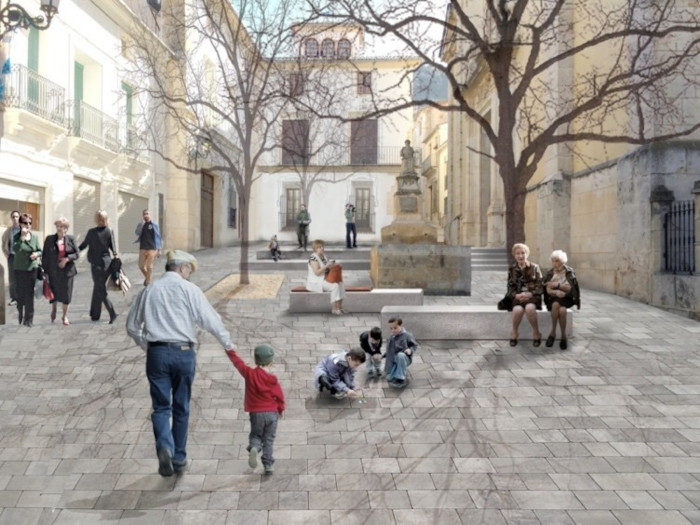
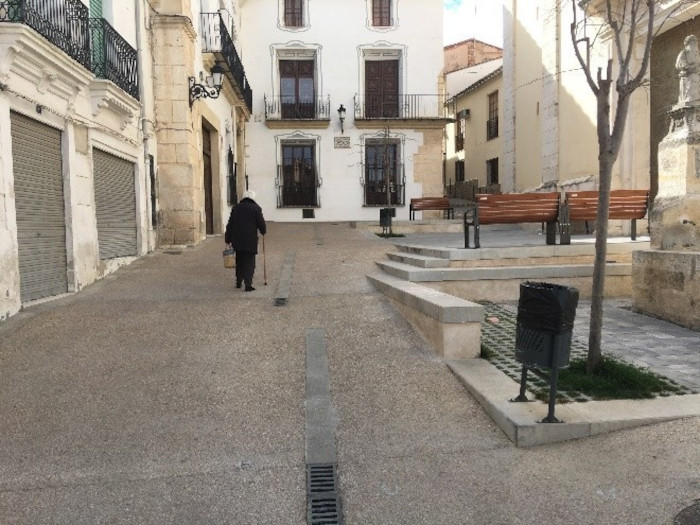
Instead of a shared, ambiguous surface, the intervention restores the previous access level to the BRL church while cleverly redirecting vehicular traffic to the perimeter. This seemingly simple change elevates the entire central area, claiming it as a predominantly pedestrian zone. By doing so, it creates a safer, more serene environment where people can move freely without the constant presence of cars. This strategic decision is a fundamental step in designing a “city for people”, proving that a pavement can be a statement of intent, prioritizing human experience over all else. The successful execution of this intricate work highlights the importance of expert urban planning that can navigate the complexities of historic sites to deliver modern functionality.
Designing for a “City for People” in the Historic Center
The true intellectual core of this project lies in its specific design solutions. Every detail was crafted to address the site’s unique challenges while simultaneously enhancing its potential as a habitable space. The result is a public square that seamlessly blends functional excellence with a profound respect for its heritage.
Reclaiming and Reactivating the Public Realm
One of the most significant challenges was the longitudinal slope of the square. Rather than leveling the entire area, which would have been both costly and disrespectful to the natural topography, the design team opted for an elegant solution: a stepped grandstand. This feature not only resolves the difficult geometry but also creates a new, tiered seating area. What was once a simple slope is now a functional, attractive space for people to rest, gather, and observe the life of the square, effectively turning a barrier into a key social hub. This smart design intervention is at the heart of what makes a “city for people“ so successful.
Materials and Microclimates: The Art of Placemaking
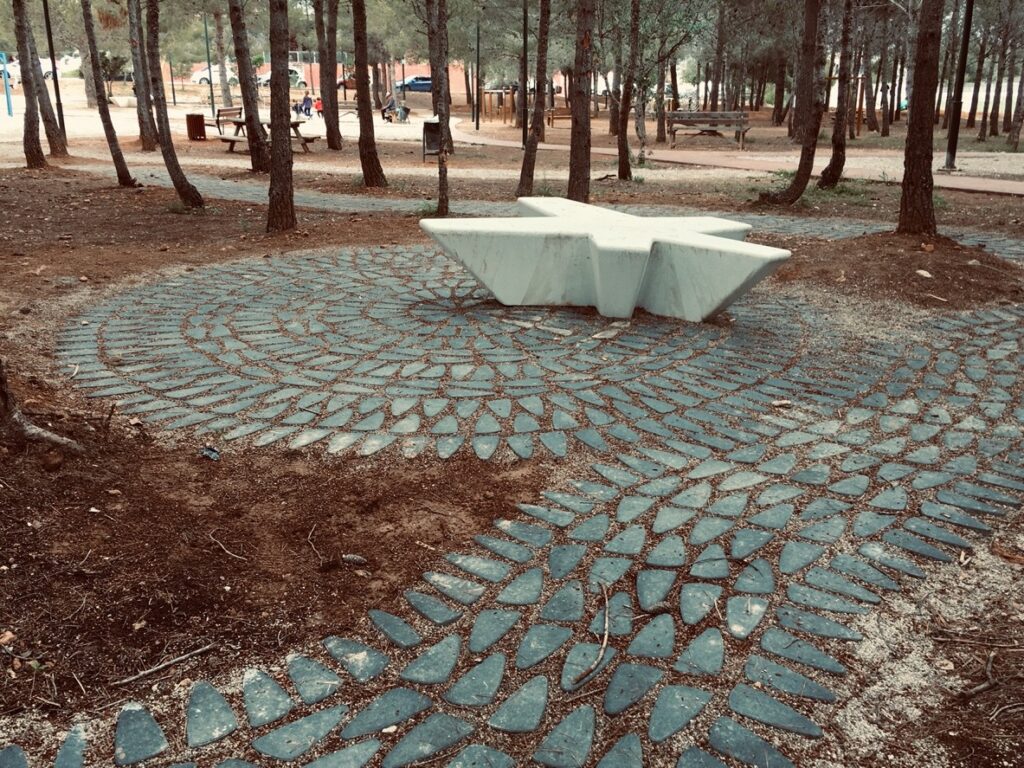
The choice of materials played a crucial role in the project’s success. Exposed aggregate concrete was used to handle the demanding geometries of the new design. This material provides durability and a distinct texture that both contrasts with and complements the surrounding historic buildings. In addition, the strategic placement of greenery and street furniture was key to improving the microclimate of the square. Two large lime trees were positioned to frame the space, providing structure and natural beauty. The existing fountain was carefully integrated into the new layout, complete with benches, creating a cool, shaded area for respite. Furthermore, fast-growing mulberry trees were planted to provide much-needed urban shade for the benches near the church and chapel entrances, accompanying visitors and residents as they access the adjoining garden.
A Symbiotic Relationship with Community and Heritage
The project in Vallada serves as a powerful model for urban planners because it showcases how modern interventions can coexist with and even enhance historic spaces. By recovering pedestrian access, integrating thoughtful social spaces like the tiered seating, and selecting materials and greenery that respect the context of the historic center, the project reinforces the value of community life. It is an invitation for people—locals and tourists alike—to inhabit the square, linger, and appreciate its rich heritage. The finished space is not just for looking at; it is for living in.
The success of a repaving project like this depends on a deep understanding of urban design principles, a respect for historical context, and an unwavering commitment to the well-being of the people who will use the space. It demonstrates that the most impactful projects are those that turn functional needs into social opportunities.
If your council is looking to revitalize its own historic center and create a genuine “city for people”, the expertise to balance heritage with modern design is invaluable. We can help you navigate the complexities of such a project.
Contact us today to explore how strategic design can transform your public spaces.